
Recognising fear of failure in children: signs and what you can do
Many children find tests or new things stressful. With fear of failure, that tension becomes so great that a child no longer shows what they can do. How do you recognise it, and how can you help as a parent?
In short
- Fear of failure is the fear of failing or not being good enough.
- You can recognise it in words, behaviour, the body and contact with others.
- Listen, acknowledge the effort and make mistakes normal.
- Does the tension last? Seek help from your GP or the school.
What is fear of failure?
Fear of failure is the fear of failing or not being good enough. A child is afraid of mistakes, of a bad grade or of what others think. As a result they often perform below their ability, which reinforces the feeling of “I can't do it anyway”.
Signs you can recognise
- In words: your child often says they can't do something, that they are stupid or that it won't work anyway.
- In behaviour: your child puts off schoolwork, avoids tests or new situations, wants to do everything perfectly or gives up quickly.
- In the body: your child is tense or restless before a test, or often has headaches or stomach aches around school.
- In contact: your child withdraws, asks for a lot of reassurance or keeps comparing themselves with others.
What can you do as a parent?
- Listen without trying to fix things straight away. Say, for example: “That sounds stressful.”
- Acknowledge what your child has tried and learned, rather than only the grade.
- Make mistakes normal. Tell your child about a mistake of your own and what you learned from it.
- Break a big task into small steps.
- Make sure there is relaxation before a test, for example being active outdoors.
- Talk to the teacher or mentor about what your child needs.
When should you seek help?
Does the tension persist, is your child increasingly not going to school, or are you worried about your child's health or sleep? Then contact your GP, the school counsellor or the youth health care service. Coaching is a supplement and does not replace help or treatment.
How horse coaching can help
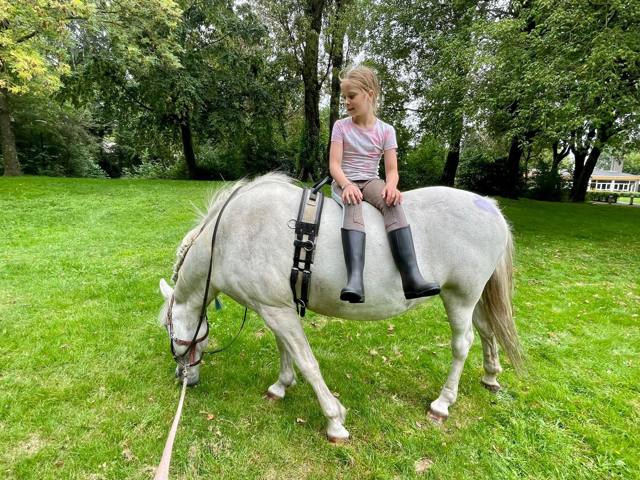
Horses respond honestly to tension and body language, without judgement. In contact with a horse, a child notices they are seen, even when they don't say much. There they can practise calm, courage and self-confidence in a playful way. I don't look at what isn't working, but at what is possible.
Read more about coaching for fear of failure and struggling at school or about horse coaching for children and teens. Coaching is also possible without a horse. Want to know what is possible for your child? Send me an email using the buttons below.
Also read: Back to school after time away: start with small steps.
Ready to get started?
Send me an email or a WhatsApp message with your question. Then we'll arrange an introductory meeting.
Send an email Chat via WhatsApp
Or email Info@coachieclub.nl
Service area: the provinces of South Holland and Utrecht, including Rotterdam, Gouda and Utrecht.